

Press Release – April 9, 2026
The LEATHER HALL OF FAME is pleased to announce that after reviewing the nominations received from the community, the
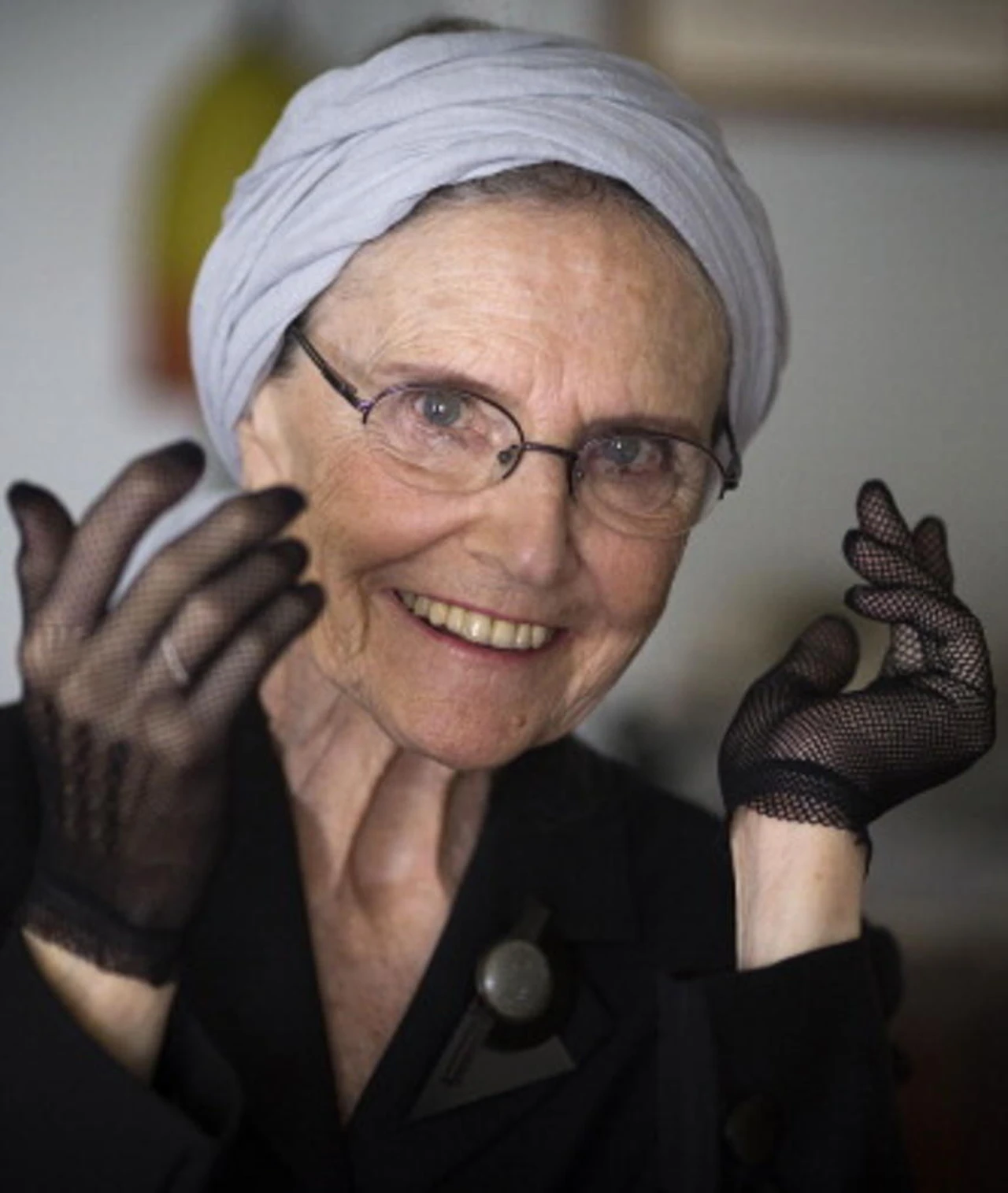

CATHERINE ROBBE-GRILLET is a French writer and actress who, in the course of an SM career spanning over 70 years, has left her imprint on SM subcultures in numerous capacities.
As Jean de Berg, a male pseudonym, in 1956, at 25, she published L’Image. A fictional, but realistic, account of the SM initiation of the male narrator by the woman he loves and her female slave, the novel was deemed immoral by the French authorities and its diffusion strictly restricted. A US-American translation came out in 1966, and the book instantly became a classic of SM literature — with Susan Sontag listing it in 1967 as one of only 5 pornographic books she credited with literary value.
Later on, for her SM persona as dominatrix, she feminized the pseudonym and, starting in the 1970s, Jeanne de Berg became famous far beyond France for her highly staged, sophisticated, and ritualized SM “ceremonies.” In 1985, the publication of Cérémonies de Femmes (translated as Women’s Rites), an autobiographical account of her most memorable SM experiences, confirmed Jeanne de Berg’s status as France’s most famous dominatrix in the world.
In 2002, Interviews With Jeanne de Berg confirmed what a popular news and celebrity magazine had revealed in 1985 (without being denied by the author): behind Jean and Jeanne de Berg was someone the public had known for as long as they had known Jean de Berg. Since the 1950s, Catherine Robbe-Grillet was known as the wife and muse of internationally known writer and filmmaker Alain Robbe-Grillet, “the Pope of the New Novel,” in whose movies she often appeared.
Several autobiographical accounts have since documented her life, her introduction to SM by her husband, their open relationship, etc., and she has taken the role of an unapologetic SM apologist in the media who has been able to demystify and de-stigmatize her most extreme practices by talking about them to mainstream audiences with a candor and an openness that perhaps only an extremely proper, soft-spoken, well-mannered, elderly, 4'8" woman could afford.
After Alain’s death in 2008, she remarried with Beverly Charpentier, her slave, with whom at 95 she still lives the life today!
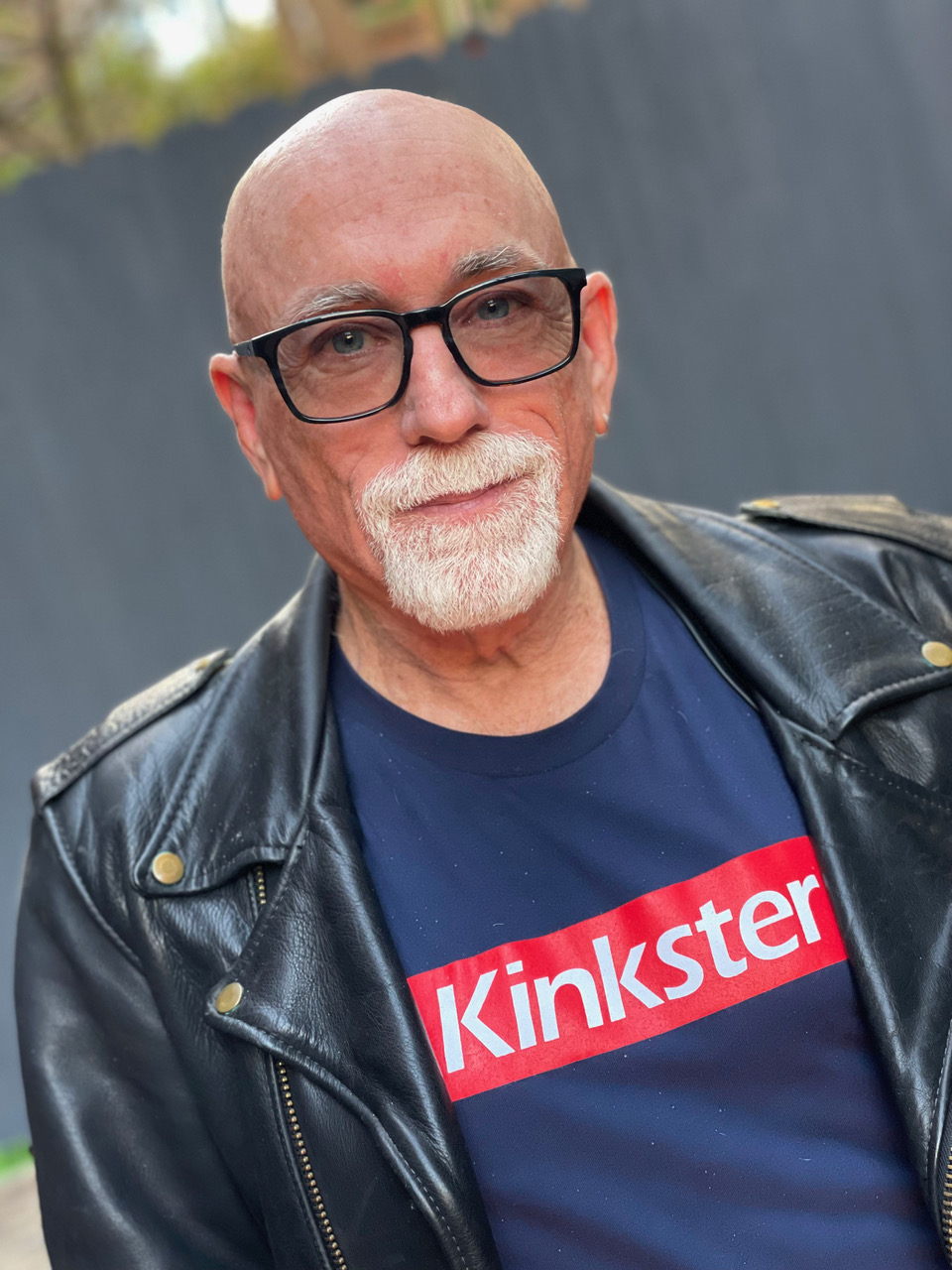
Starting in 1973, RACE BANNON has, contributed to kinky subcultures in so many capacities and in so many instances that it is difficult to grasp the breadth of his impact. A San Francisco based community organizer, activist, educator, publisher, prolific writer in his own right, his claims to fame include, but are not limited to:
-
-
-
- cofounding (with Guy Baldwin) Kink-Aware Professionals, the world’s largest referral service dedicated to providing the community with a listing of kink-aware psychotherapeutic, medical or legal professionals;
- co-leading first, then leading the DSM project, aimed at fighting the stigmatization of kinksters in the medical literature and which was instrumental in raising the community awareness around this issue;
- in 1992, founding Daedalus Publishing, the first company dedicated to BDSM books;
- in 1993, writing the popular Learning the ropes: A Basic Guide to Safe and Fun BDSM Lovemaking;
- in the mid- to late-1990s, producing and hosting “Bound To Talk,” the first internet talk show about kinky and non-traditional sexualities;
- in 2011, creating Race’s Bar, a Facebook group with over 3000 members, designed to use social media to facilitate face-to-face socializing for kinky gay men in the Bay area;
- in 2014, taking over the leather column in the Bay Area Reporter and, over the course of 7 years, publishing 165 columns;
- since 2018, advising the multipart TV series Divine Deviance;
- over the years, hosting several play parties.
-
-
Living his life as an openly kinky leather gay man living with HIV and with chosen family intimates that include a partner of 35 years, a collared boy of 15 years, and a boyfriend of 4 years, Race has also been involved in the polyamory community and, through his writings, for example his Substrack, “Love at the Edges,” he has been a prominent advocate for ethical non-monogamy.
Last, but by no means least, his years of activism in HIV/STI treatment and prevention, and his role as a national advocate for PrEP and Doxy PEP have earned him the 2025 National AIDS Memorial Lifetime of Commitment Award.
For close to 30 years, MASTER TAÍNO has been a giant force and institution-builder in the US-American Master-Slave community.
His leather journey started in Washington DC where he arrived from his native Puerto Rico in 1983, when he joined the Defenders LLC, a fellowship for Christian leathermen and -women for which he served as president from 2001 to 2004.
In 1999, he created the DC Chapter of Masters And slaves Together (MAsT) and served as its director for a whole 23 years, until his retirement in 2022.
In 2001, he held the first "Master Taíno Training Weekend," later renamed "Master Taíno Training Academy" (now "MTTA Academy"), an event started to train male slaves that quickly expanded its scope to hold weekends of training for Masters and later for females as well: in the 18 years from the founding to 2019, when Taíno handed it to a younger generation, over the course of 61 events for slaves and 28 for Masters, an impressive total of 367 slaves and 278 Masters coming from as far as Portugal, Spain, Germany and even Australia had their journeys shaped by the teachings of Taíno and the team he had assembled. Master Taíno has taught on M/s relationships outside of his school, across the US as well as in several Latin American countries.
Perhaps even more impactful, in 2004, he created the Master/slave Conference, an annual event held in DC during the Labor Day weekend for which he served as executive producer from the creation until his retirement in 2022. In 2021, the Master/slave Conference gave rise to MsC WorldWide, an annual, virtual conference that for its 5th iteration in February 2026 brought together 500 people from 31 countries covering 5 continents.
Since his “retirement” in 2022, Taíno has largely relocated to San José, Costa Rica, where he helped start a MAsT Chapter: MAsT has several chapters in Canada and in Europe, but the San Jose chapter is the first ever in Central or Latin America.
Master Taino was also the author, in 2024, of Kinky Tales: Real Stories of My Journey (Fair Page Media).
This 18th annual selection of Leather Hall of Fame inductees is only the second to feature 3 living inductees. Our priority is, to the extent it is possible, to celebrate each of them in their presence in a ceremony open to all who wish to attend — even if that means adapting the format we have generally followed for our inductions.
Stay tuned: details about these inductions will be shared as they are finalized.